Auditing and Accreditation, Uncategorized
Auditing and Accreditation 2
Audit management is responsible for ensuring that board-approved audit directives are implemented. Audit management helps simplify and well-organise the workflow and collaboration process of compiling audits. Most audit teams heavily rely on email and shared drive for sharing information with each other. Typically task such as submitting client request, sender reminder and following up on findings are all done from using broad tools. Investing in the right software could help save time, reduce errors and save on resources.[1]
Audit management oversees the internal/external audit staff, establishes audit programs, and hires and trains the appropriate audit personnel. The staff should have the necessary skills and expertise to identify inherent risks of the business and assess the overall effectiveness of controls in place relating to the company’s internal controls.
Internal audit
Internal audit is a function set up within the organisation to reduce the risk of fraud in the organisation and runs according to the management commands. This is the main difference between internal and external audit where external auditors are independent of management and hence external auditors give an opinion on the financial statements as presented by the management of the organisation. This is performed by the companies internal auditing team, this can help companies improve because strengths and weaknesses are identified. Senior internal audit managers need to manage the responsibilities of what different people want.
Like all supervisor that are part of the business there is a need to:
- Understand what a person with an interest or concern in the business and customers want
- Agree aim and priorities
- Plan activities
- Establish resources and processes
- Record performance, making changes to keep things on track if required.
External audit
The objectives of an external audit or audits being conducted by someone not part of the business, is when one business audits a different business to determine if the accounting records are complete and correctly prepared according to GAAP (GAAP is the highest U.S. power on accounting standards and they must be followed by jurisprudence when preparing financial information for businesses) provisions. The organisations have a formal agreement for the supply of goods and services. External audits make good business exercise.
Smaller businesses benefit from external audit because it can act as an education for small business owners, as many small business owners do not have an in-depth understanding of accounting. Businesses can use external auditor to spot mistakes that might have occurred and went noticed. Errors that occur in accounting statements can lead to businesses making bad decisions. For larger corporation audit provide confidence to the shareholder and investors that the figures shown in the books is reliable.
Companies have to appoint an auditor to do an annual external audit on your accounts if your business is:
- an authorised professional firm
- a BIPRU investment firm
- an insurance intermediary
- an investment management firm
- a mortgage administrator
- a mortgage intermediary
- a mortgage lender
- a personal investment firm
- a securities and futures firm
- a service company
Third party audit
A third party audit gives feedback to important documents and processes including quality manuals or performance development plan, records including instructing, organisational charts, and examination of the processes within the extent of the audit. A third party audit is conducted by an audit organisation that does not have the traditional customer-supplier relationship and does not carry any conflict of interest. Institutions such as registrars (certification bodies) or legislature are usually the types of organisations that perform these types of audit.
Third party audit
A third party audit gives feedback to important documents and processes including quality manuals or performance development plan, records including instructing, organisational charts, and examination of the processes within the extent of the audit. A third party audit is conducted by an audit organisation that does not have the traditional customer-supplier relationship and does not carry any conflict of interest. Institutions such as registrars (certification bodies) or legislature are usually the types of organisations that perform these types of audit.
Managing an audit
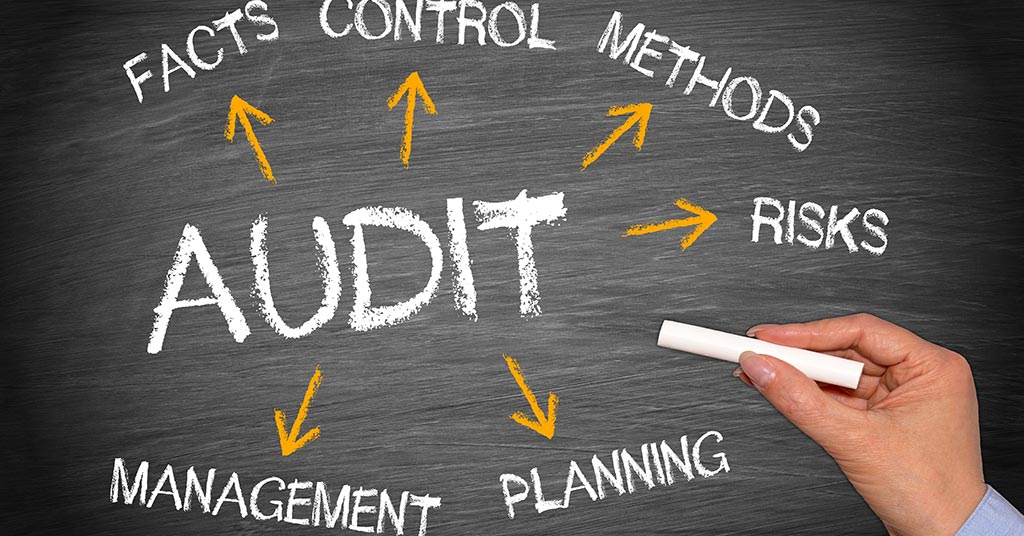
To manage an audit team in a manner to achieve good results, it is important that audit managers have strong leadership skills, workers want to work for someone that has moved up the ranks which shows that the manager they work with has experience doing the job team members are doing. It is important that the teams works efficiently, carrying out audit can be time consuming so being organised and managing different information helps with the productiveness. Auditing involves planning, method, facts, procedures, controls, risk, and management. Communication skills is key to many successful auditors, as you develop through your career getting you message across in your unique way clearly helps project your professionalism. Auditors from different countries may work with each other to help the same client, it is common for auditors to work directly at their client company in their officend does not carry any conflict of interest. Institutions such as registrars (certification bodies) or legislature are usually the types of organisations that perform these types of audit.
Managing an audit
To manage an audit team in a manner to achieve good results, it is important that audit managers have strong leadership skills, workers want to work for someone that has moved up the ranks which shows that the manager they work with has experience doing the job team members are doing. It is important that the teams works efficiently, carrying out audit can be time consuming so being organised and managing different information helps with the productiveness. Auditing involves planning, method, facts, procedures, controls, risk, and management. Communication skills is key to many successful auditors, as you develop through your career getting you message across in your unique way clearly helps project your professionalism. Auditors from different countries may work with each other to help the same client, it is common for auditors to work directly at their client company in their offices.
- Management-Integrated Framework” or other similar and generally recognized frameworks for entity-wide risk management when evaluating an organization’s entity-wide risk management practices. Professional internal auditors also use control self-assessment (CSA) as an effective process for performing their work.
- Consultant auditors are external personnel contracted by the firm to perform an audit following the firm’s auditing standards. This differs from the external auditor, who follows their own auditing standards. The level of independence is therefore somewhere between the internal auditor and the external auditor. The consultant auditor may work independently, or as part of the audit team that includes internal auditors. Consultant auditors are used when the firm lacks sufficient expertise to audit certain areas, or simply for staff augmentation when staff are not available.
The most commonly used external audit standards are the US GAAS of the American Institute of Certified Public Accountants and the International Standards on Auditing (ISA) developed by the International Auditing and Assurance Standard.
Performance audits
Performance audit refers to an independent examination of a program, function, operation or the management systems and procedures of a governmental or non-profit entity to assess whether the entity is achieving economy, efficiency and effectiveness in the employment of available resources. Safety, security, information systems performance, and environmental concerns are increasingly the subject of audits. There are now audit professionals who specialize in security audits and information systems audits. With nonprofit organizations and government agencies, there has been an increasing need for performance audits, examining their success in satisfying mission objectives.
Quality audits
Quality audits are performed to verify conformance to standards through review of objective evidence. A system of quality audits may verify the effectiveness of a quality management system. This is part of certifications such as ISO 9001. Quality audits are essential to verify the existence of objective evidence showing conformance to required processes, to assess how successfully processes have been implemented, and to judge the effectiveness of achieving any defined target levels. Quality audits are also necessary to provide evidence concerning reduction and elimination of problem areas, and they are a hands-on management tool for achieving continual improvement in an organization.
To benefit the organization, quality auditing should not only report non-conformance and corrective actions but also highlight areas of good practice and provide evidence of conformance. In this way, other departments may share information and amend their working practices as a result, also enhancing continual improvement.
Project audit
A project audit provides an opportunity to uncover issues, concerns and challenges encountered during the project lifecycle. Conducted midway through the project, an audit affords the project manager, project sponsor and project team an interim view of what has gone well, as well as what needs to be improved to successfully complete the project. If done at the close of a project, the audit can be used to develop success criteria for future projects by providing a forensic review. This review identifies which elements of the project were successfully managed and which ones presented challenges. As a result, the review will help the organization identify what it needs to do to avoid repeating the same mistakes on future projects

Projects can undergo 2 types of Project audits:
- Regular Health Check Audits: The aim of a regular health check audit is to understand the current state of a project in order to increase project success.
- Regulatory Audits: The aim of a regulatory audit is to verify that a project is compliant with regulations and standards. Best practices of NEMEA Compliance Centre describe that, the regulatory audit must be accurate, objective, and independent while providing oversight and assurance to the organization.
Other forms of Project audits:
Formal: Applies when the project is in trouble, sponsor agrees that the audit is needed, sensitivities are high, and need to be able prove conclusions via sustainable evidence.
Informal: Apply when a new project manager is provided, there is no indication the projects in trouble and there is a need to report whether the project is as opposed to where its supposed to Informal audits can apply the same criteria as formal audit but there is no need for such a in depth report or formal report.
Energy audits
An energy audit is an inspection, survey and analysis of energy flows for energy conservation in a building, process or system to reduce the amount of energy input into the system without negatively affecting the output(s).
Operations audit
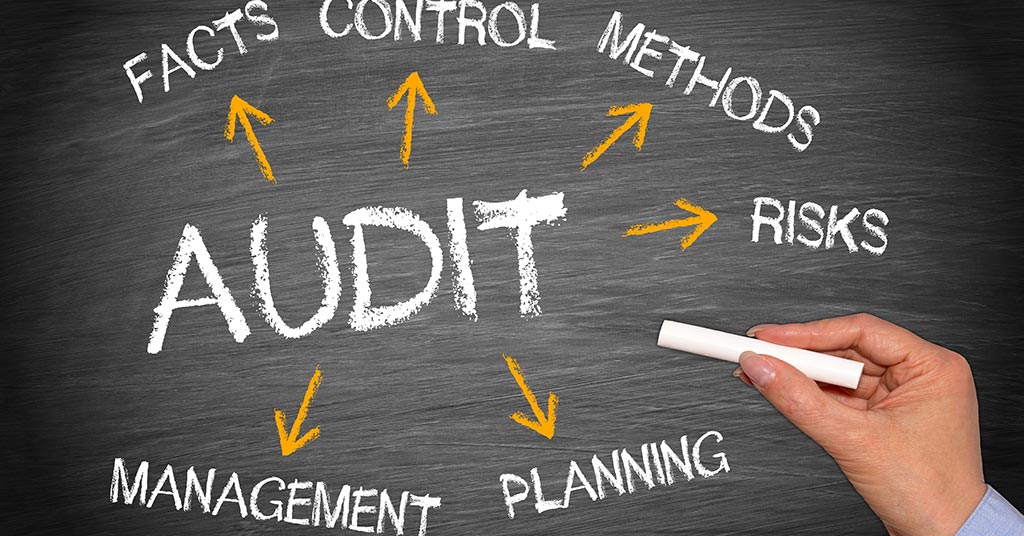
An operations audit is an examination of the operations of the client’s business. In this audit the auditor thoroughly examines the efficiency, effectiveness and economy of the operations with which the management of the entity (client) is achieving its objective. The operational audit goes beyond the internal controls issues since management does not achieve its objectives merely by compliance of satisfactory system of internal controls. Operational audits cover any matters which may be commercially unsound. The objective of operational audit is to examine Three E’s, namely: Effectiveness – doing the right things with least wastage of resources. Efficiency – performing work in least possible time. Economy – balance between benefits and costs to run the operations
A control self-assessment is a commonly used tool for completing an operations audit.
Forensic audits
Also refer to forensic accountancy, forensic accountant or forensic accounting. It refers to an investigative audit in which accountants with specialized on both accounting and investigation seek to uncover frauds, missing money and negligence.
#ISO Certification in India #Audit